

Grimoire Tea: A Beginner's Guide to Magical Brews
Table of Contents
- What Is Grimoire Tea and Why It Matters
- Tea Rituals for Beginners: Your First Magical Cup
- Magical Tea Recipes: Blending by Intention
- Herbal Ingredient Safety and Contraindications
- Tea Preparation Methods and Troubleshooting
- Building a Witchy Tea Corner at Home
- Frequently Asked Questions
Last Updated: October 13, 2026
What Is Grimoire Tea and Why It Matters
Grimoire tea is a loose-leaf tea or botanical brew blended with a specific intention in mind, then recorded in a personal book of recipes and rituals. It turns an everyday cup into a small, repeatable spell for your day.
The idea borrows from old grimoires, the handwritten books where practitioners logged recipes, correspondences, and results. A tea grimoire works the same way. You write down what you used, why you chose it, and how it felt.
Why does this matter now? Because most of us drink tea on autopilot. A grimoire tea practice slows that down. You measure, you steep, you sip with attention. The ritual is the point.
You do not need to believe in magic to get something real from it.
The Non-Magical Interpretation: Tea as Mindful Ritual
Strip away the witchy language and grimoire tea is a mindfulness practice with good flavor.
Many people find that a fixed tea ritual gives their morning a clear starting line. Remote workers in particular tend to like it. There is no commute to mark the shift into work, so a five-minute brew becomes that marker instead.
The Harvard Health overview of mindfulness and relaxation explains how repeated, sensory-focused routines can help settle a busy mind. A warm cup hits three senses at once: smell, taste, and touch.
So if you are not "witchy enough" for this, you are still welcome here. Intention works whether you call it a spell or a habit.
Tea Rituals for Beginners: Your First Magical Cup
Start with one tea, one intention, and one time of day. That is the entire beginner setup. Adding more too soon is the fastest way to quit.
Here is a simple first ritual you can run tomorrow morning:
- Pick your intention. Calm, focus, courage, rest. One word is enough.
- Choose a single tea that fits it. No blending yet.
- Boil fresh water and let it cool to the right temperature.
- Steep for the full time. Set a timer. Do not walk away.
- Hold the cup for a moment before the first sip.
- Say or think your intention once.
- Drink it without your phone nearby.
That is it. Seven steps, about ten minutes.
The first week, do this at the same time each day. A common mistake is treating the ritual as a weekend treat. Daily repetition is what builds the association between the cup and the calm.
Timing Your Ritual to Your Day
The time of day you choose matters less than keeping it consistent. Most beginners find that anchoring the ritual to an existing habit works best. If you already make coffee in the morning, swap that moment for tea. If you unwind with a book at night, brew a cup to go with it.
Here is how long each step actually takes, so you can fit the ritual into a realistic window:
- Boiling water: 3 to 5 minutes
- Cooling to the right temperature: 2 to 5 minutes
- Measuring tea: 30 seconds
- Steeping: 2 to 5 minutes
- Drinking with attention: 5 to 10 minutes
Total: roughly 12 to 25 minutes. If that feels long, cut the drinking time first. Even five minutes of undistracted sipping counts.
Troubleshooting Your First Week
Most people hit one of these snags in the first seven days. Here is how to handle them without quitting.
You forgot to brew. Set a phone alarm for the same time each day.
The tea tastes bad. You probably used water that was too hot or steeped too long. Green tea and white tea are the most sensitive.

You feel nothing. That is normal. The point is not a dramatic shift. It is the pause. Give it two weeks before you judge it.
You missed a day. Do not restart the count. Just brew the next cup. Missing one day does not break the practice.
Once the habit sticks, you can start writing entries in your grimoire: date, tea, intention, and a one-line note on how you felt.
Magical Tea Recipes: Blending by Intention
Magical tea recipes work by pairing a base tea with herbs chosen for a goal. You are building two layers: flavor and intention.
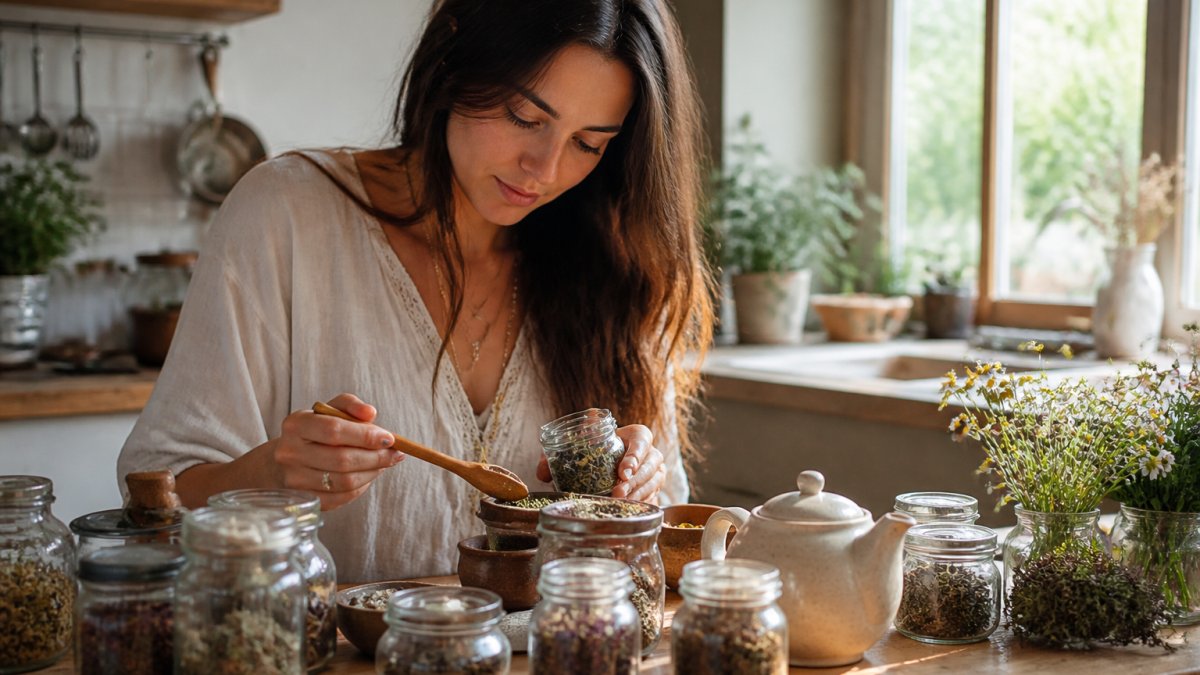
Think of your blend in three parts. A base gives body. A supporting herb adds flavor. A finishing note lifts the whole cup.
| Intention | Base Tea | Supporting Herb | Finishing Note |
|---|---|---|---|
| Calm | Green tea | Chamomile | Lavender |
| Focus | Black tea | Peppermint | Lemon peel |
| Comfort | Masala chai | Cinnamon | Honey |
| Refresh | Green tea | Spearmint | Hibiscus |
Blend in small batches. Two teaspoons of base to one teaspoon of supporting herb is a safe starting ratio. Add the finishing note a pinch at a time.

Write every version down, even the failures. A blend you hated is still useful data.
A Tested Base Recipe: Calm and Clarity Blend
This is the blend we would hand a total beginner. It is forgiving, it tastes good without sweetener, and it works hot or iced.
You will need:
- 2 teaspoons loose-leaf green tea
- 1 teaspoon dried chamomile
- 1 pinch dried lavender
- 1 small pinch dried lemon peel
Method:
- Warm your teapot with hot water, then empty it.
- Add the tea and herbs.
- Pour water at roughly 80°C over the blend.
- Steep 2 to 3 minutes. Green tea turns bitter past that.
- Strain and sip slowly.
Expected result: A soft, floral cup with a clean finish. The chamomile rounds off the green tea, and the lemon peel keeps it from tasting flat.
Yield: This makes one 8-ounce cup. To make a 4-cup pot, use 8 teaspoons green tea, 4 teaspoons chamomile, 4 pinches lavender, and 4 small pinches lemon peel. Steep time stays the same.
Substitutions for Hard-to-Find Ingredients
Not every herb is easy to source. Here are workable swaps that keep the intention and flavor close.
- Chamomile → Lemon balm. Both are calming. Lemon balm adds a citrus note, so reduce or skip the lemon peel.
- Lavender → Rose petals. Rose is gentler and floral. Use half the amount, as rose can overpower.
- Green tea → White tea. White tea is lower in caffeine and softer. It pairs well with chamomile and lavender.
- Lemon peel → Lemongrass. Lemongrass is more intense. Use a small pinch and taste before adding more.
- Peppermint → Spearmint. Spearmint is sweeter and milder. It works for focus blends but is less sharp.
If you cannot find an ingredient locally, look for food-grade dried herbs from a reputable tea supplier or herb shop. Avoid decorative or craft-grade botanicals, which may be treated with pesticides not meant for consumption.
Sourcing and Storage
Buy herbs in small quantities. Dried herbs lose potency after about six to twelve months. Whole leaves and flowers keep longer than ground powders.
Store your blends in airtight jars away from light and heat. A dark cupboard is better than a windowsill. Label each jar with the date you blended it, not just the ingredients. Herbs fade over time, and a dated jar tells you when a blend started tasting flat.
If you want to skip the blending step, our Jasmine green tea is a gentle, sweet starting point for a calm cup. For something bolder, our Masala Chai is full-bodied and spicy, and it holds up well with milk.
Herbal Ingredient Safety and Contraindications
Herbal ingredients are not automatically safe just because they are plants. Some interact with medication, and some are not suitable during pregnancy. Check before you blend, especially if you take anything daily.
A few common cautions:
- Lavender: generally fine in food amounts, but large doses are not recommended during pregnancy.
- Chamomile: avoid if you have a ragweed or daisy-family allergy.
- Peppermint: can worsen reflux for some people.
- Hibiscus: may lower blood pressure, so check with a doctor if you take related medication.
- Licorice root: not suitable for people with high blood pressure.
The MedlinePlus herbal supplement database is a free, plain-language place to check any herb before you use it.
Keep your blends simple at first. One new herb at a time makes it easy to spot what caused a reaction. If you are pregnant, nursing, or managing a health condition, talk to your doctor before starting a regular herbal tea habit.
Tea Preparation Methods and Troubleshooting
Most bad cups come down to water temperature or steep time. Fix those two and your tea improves immediately. Everything else is fine-tuning.
Water temperature by tea type:
- Green tea: 75 to 80°C
- White tea: 80 to 85°C
- Oolong: 85 to 90°C
- Black tea: 95 to 100°C
- Herbal blends: 100°C
Common problems and fixes:
| Problem | Likely Cause | Fix |
|---|---|---|
| Bitter taste | Water too hot or steeped too long | Drop the temperature, shorten the steep |
| Weak, watery cup | Too little leaf | Add half a teaspoon and retry |
| Cloudy brew | Fine particles or hard water | Use a finer strainer or filtered water |
| Flat aroma | Old herbs | Check the jar date and replace |
For large-batch brewing, scale the leaf but not the time. Doubling the tea does not mean doubling the steep. A big pot of green tea still wants 2 to 3 minutes.
Our Earl Grey is a good one to practice on. It wants water at about 95°C for 5 to 10 minutes, which gives you room to taste the difference as you adjust. Our Moroccan Mint is refreshing hot and works even better iced.

Building a Witchy Tea Corner at Home
A witchy tea corner does not need a dedicated room.
Keep these within arm's reach:
- Your teapot and a strainer
- Two or three jars of loose-leaf tea
- A small dish for spent leaves
- Your grimoire and a pen
- One candle or a small lamp
Arrange it so you can brew without leaving the spot. Every extra trip to the kitchen breaks the mood.
Add one seasonal touch if you like. A sprig of dried rosemary in autumn, a few dried citrus slices in winter.
If you want a shortcut to a stocked corner, a subscription makes it easy.
Building a grimoire tea practice takes one cup, one intention, and a few written notes. The hard part is not the blending.
At Genevieve's Secret Grimoire Brew, we source fresh loose-leaf tea, so every cup starts from real ingredients.
Get started with Genevieve's Secret Grimoire Brew and make your next cup mean something.
Frequently Asked Questions
What is grimoire tea?
Grimoire tea is any tea blend made with intention, often inspired by the recipes and correspondences found in a personal grimoire or Book of Shadows. It combines loose-leaf tea, herbs, and sometimes fruit or floral ingredients chosen for their flavor and symbolic qualities. You can drink it purely for enjoyment or treat the brewing process as a small ritual for focus, calm, or energy.
How do you create a simple tea ritual for beginners?
Start with one cup and one intention. Choose a loose-leaf tea or herbal blend that matches your goal, heat water to the right temperature, and steep while paying attention to the aroma and color. Speak or think your intention quietly as you pour. The whole process takes five to ten minutes and needs no special equipment beyond a kettle and a strainer.
What herbs are commonly used in magical tea recipes?
Common choices include spearmint, peppermint, lavender, hibiscus, and lemon balm. Each brings a distinct flavor profile and traditional correspondence: lavender for calm, peppermint for clarity, hibiscus for warmth and energy. You can blend these with a green or black tea base, or use them alone for a caffeine-free botanical brew.
How can you make a witchy tea corner at home?
Pick a small, quiet spot near a window or on a kitchen counter. Add a tray to hold your teapot, a few jars of loose-leaf tea, and a candle or small plant. Keep it uncluttered so the space feels intentional. Even a single shelf with your favorite blends and a mug can work as a witchy tea corner if it helps you slow down.