

Mindful Coffee Brewing Techniques 2026: A Calm Guide
Table of Contents
- Why Mindful Coffee Brewing Matters in 2026
- The Best Coffee Brewing Tools for Mindfulness
- A Step-by-Step Mindful Coffee Brewing Ritual
- Mindful Coffee Meditation: Turning Your Cup Into a Practice
- Coffee Is Healthy for You: What the Ritual Adds
- When the Ritual Falls Apart: Fixing Mindful Failures
- Frequently Asked Questions
Last Updated: September 30, 2026
Why Mindful Coffee Brewing Matters in 2026
Mindful coffee brewing techniques 2026 start with one simple shift: treating your morning cup as a practice, not a pit stop. At Genevieve's Secret Grimoire Brew, we hear the same thing from customers again and again. They want their coffee to feel like a small ritual, not a rushed habit.
That shift matters more than ever. Remote work has blurred the line between "getting ready" and "starting work." For many people, the coffee maker is now the only clear boundary between sleep and screens.
Here's the good news. You don't need new equipment or an hour of free time to change this. You need about ten minutes and a bit of attention.
Below, we'll break down exactly how to turn a daily pour into a calming, repeatable ritual. You'll learn the tools that help, a step-by-step method, and how to fix it when the calm falls apart.
What Mindful Coffee Brewing Actually Means
Mindful coffee brewing is the practice of giving your full attention to each step of making coffee, from grinding the beans to the first sip. It's not about brewing perfectly. It's about being present while you do it.
That means noticing the smell of freshly ground coffee. Feeling the weight of the kettle in your hand. Watching the water hit the grounds during the bloom phase.
The goal isn't a flawless cup. The goal is a few minutes of calm focus before your day pulls you in ten directions.
How Sensory Focus Calms Your Nervous System
Sensory awareness works because it gives your brain one job instead of twenty. When you focus on smell, sound, and touch, you stop rehearsing your to-do list.
You don't need a study to feel this. Think about the last time you really noticed the aroma of a good cup. That moment of attention is the whole point.
The ritual itself becomes the stress reduction. Not the caffeine. Not the equipment. The act of paying attention.
The Best Coffee Brewing Tools for Mindfulness
The best coffee brewing tools for mindfulness are the ones that slow you down and ask for your hands, not just your button-pressing finger. A machine that does everything for you removes the very steps that make the ritual work.
That doesn't mean you need expensive gear. It means choosing tools that reward attention. And the tool you choose shapes the kind of mindfulness you practice. A pour-over asks for rhythm. A French press asks for patience. An AeroPress asks for tactile focus. None is inherently better, but each trains a different mental muscle.
Pour-Over, Immersion, and Pressure: Which Suits Your Ritual
Each brewing style asks something different of you. Here's how they compare:
| Method | Hands-On Time | Best For | Mindful Quality |
|---|---|---|---|
| Pour-over (V60, Chemex) | 3-4 minutes | Focus and rhythm | High: steady pouring keeps you present |
| French press | 4 minutes steep | Slowness and patience | Medium: waiting is the practice |
| AeroPress | 2 minutes | Quick but tactile | Medium: hands-on, less waiting |
| Espresso | 1 minute | Fast, intense focus | Low: too quick for a slow ritual |
For most people building a morning practice, pour-over wins. The gooseneck kettle, the slow spiral pour, and the visible bloom phase all pull your attention back to the moment. But if you already own a French press, don't rush out to buy a V60. The French press teaches a different lesson: that stillness is part of the process. You press, then you wait. That waiting is the meditation.
AeroPress users get a compact, travel-friendly ritual that still demands both hands. The short brew time means less waiting, but the plunge itself is a moment of deliberate pressure, a physical anchor for attention. Espresso, by contrast, is too fast for most beginners. The entire shot pulls in under 30 seconds, leaving little room for the slow sensory engagement that defines mindful brewing. That doesn't make espresso 'bad', it just makes it a poor starting point for this particular practice.
A manual grinder helps too. The tactile experience of turning the crank connects your body to the process. Grind consistency matters for taste, but the real benefit is the two minutes of quiet effort. If you use a V60, a medium-fine grind works best; for a French press, go coarse. These aren't just technical specs, they're invitations to notice texture and resistance as you grind.
Whatever vessel you choose, serve it in something that feels special. A sturdy White glossy mug or a Black Glossy Mug turns an ordinary drink into something you look forward to. For mornings on the move, the Travel mug with a handle keeps the ritual going past your front door.


A Step-by-Step Mindful Coffee Brewing Ritual
Here's a full ritual you can run in about ten minutes. Total time: 10 minutes. Difficulty: beginner.
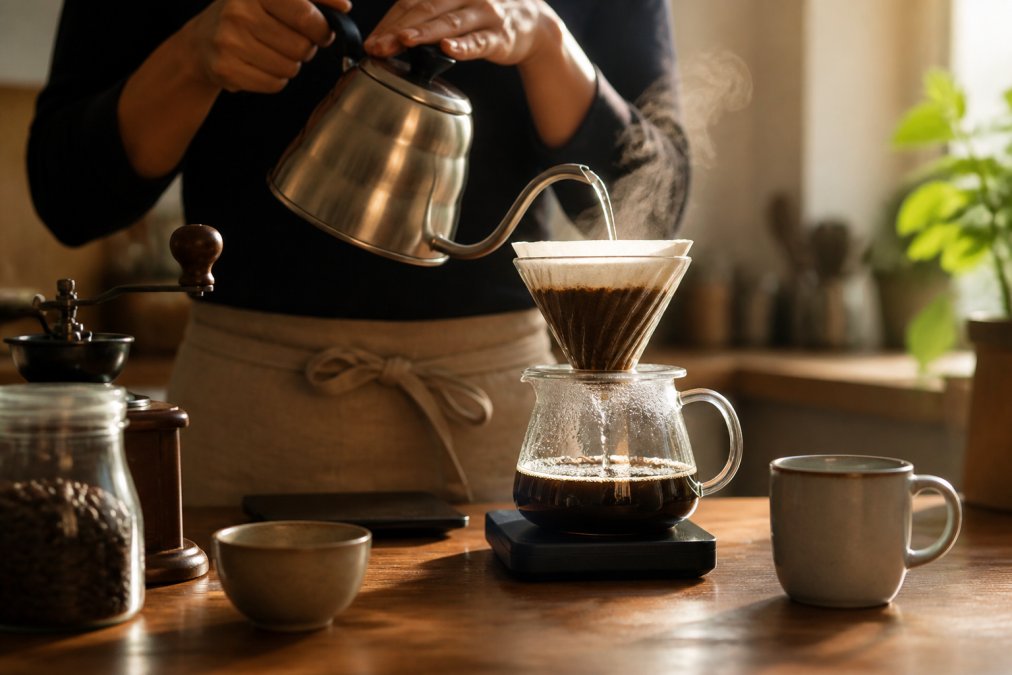
Step 1: Grind With Intention
Measure your beans and grind them by hand if you can. Listen to the sound. Feel the resistance. Notice the aroma as the grounds release their oils.
This step sets the tone. Rushing the grind tells your brain the whole morning will be rushed.
Step 2: Breathe Through the Bloom
Pour a small amount of hot water over the grounds and wait. This is the bloom phase, when the coffee releases trapped gas and puffs up.
Use this pause for one slow breath. In through the nose, out through the mouth. The bloom takes about 30 seconds. That's 30 seconds of nothing to do but watch and breathe.
Step 3: Pour With Rhythm, Sip With Awareness
Pour in slow circles, keeping a steady rhythm. Then sit down before you drink.
Take the first sip without your phone nearby. Notice the flavor notes, the mouthfeel, the aftertaste. That first sip, taken slowly, is the reward for the whole ritual.
Mindful Coffee Meditation: Turning Your Cup Into a Practice
Mindful coffee meditation is a simple practice: you treat the act of drinking coffee as a meditation, using the senses as your anchor instead of the breath. It's the same idea as a breathing exercise, just with a cup in your hands.
Here's how it works. Sit with your cup. Close your eyes for a moment.
Coffee Is Healthy for You: What the Ritual Adds
Coffee is healthy for you in ways most people already know. It's linked to better focus and a lower risk of several long-term conditions. But the ritual adds something the caffeine can't, and the science behind that addition is more concrete than you might expect.
When the Ritual Falls Apart: Fixing Mindful Failures
Your ritual will break. Some mornings you'll sleep through your alarm and grab a cold cup on the way out the door. That's fine. The practice isn't about perfection.
Here's how to handle the most common failures:
- You feel rushed. Shrink the ritual. Even a 60-second version, one breath and one slow sip, counts.
- You forgot to grind fresh. Use pre-ground coffee and focus on the pour instead. Attention matters more than freshness here.
- Your mind won't settle. Name what's distracting you, then return to the cup. That return is the practice.
- You're traveling. Use the Travel mug with a handle and take one mindful sip before you start the car.
Frequently Asked Questions
What equipment do I need to start a mindful coffee ritual?
You need four basics: a manual grinder, a brewing vessel (pour-over, French press, or AeroPress), a kettle, and a mug you enjoy holding. A gooseneck kettle helps with pour control, and a scale keeps your water-to-coffee ratio consistent. Start simple. The best coffee brewing tools for mindfulness are the ones that slow you down, not the ones with the most features. A ceramic mug like the White Glossy Mug works well because it holds heat and feels good in your hands.
How does mindful coffee brewing impact daily stress levels?
Focusing on sensory details during brewing, like the aroma profile, the sound of the pour, and the warmth of the mug, pulls your attention into the present moment. That shift away from mental chatter can lower the stress response. The ritual itself becomes a short pause before your day accelerates. Even five minutes of deliberate, unhurried brewing gives your nervous system a chance to reset before work or family demands begin.
Is coffee healthy for you if I drink it every morning?
For most adults, moderate coffee consumption fits into a healthy routine. What matters is how you drink it. Black coffee or coffee with a small amount of milk avoids added sugar and syrups. The mindful coffee brewing approach also helps because you drink slower, taste more, and stop at one or two cups instead of chain-drinking. If you have a medical condition, check with your doctor about caffeine limits.
What is the 15-15-15 coffee rule?
The 15-15-15 rule is a popular guideline for timing caffeine: avoid coffee within 15 minutes of waking, wait at least 15 minutes after drinking before eating, and stop caffeine 15 hours before bed. It is not a scientific law, but it gives structure to your coffee habit. Pairing it with mindful coffee meditation means you brew with purpose rather than reaching for a cup on autopilot the moment you wake up.
Building a real ritual takes more than technique. It takes tools that feel good in your hands and a cup you look forward to using. At Genevieve's Secret Grimoire Brew, we roast fresh beans and craft cozy, witchy pieces like our Enamel Mug to make your morning feel like a small spell. Get started with Genevieve's Secret Grimoire Brew and turn your daily cup into a few minutes of calm you actually own.